
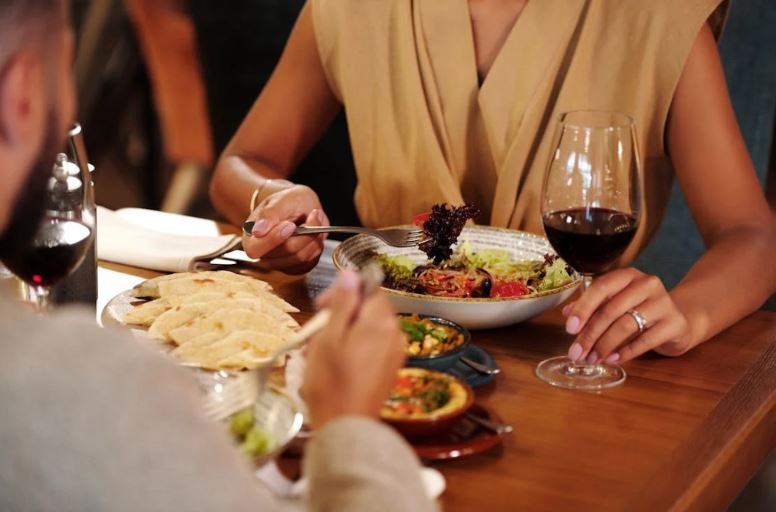
We’ve all heard of the classic five love languages: words of affirmation, acts of service, receiving gifts, quality time, and physical touch. They’ve been the backbone of relationship therapy and Instagram infographics for years. But honestly? It’s time we officially lobbied for a sixth. Food isn’t just a biological necessity or a way to pass a rainy Tuesday evening in Soho. It’s a profound, sensory, and deeply emotional way of saying “I see you” without ever opening your mouth.
Think about it. When you’re feeling under the weather, does a “get well soon” text actually help? Not really. But a bowl of steaming, salty chicken soup delivered to your doorstep? That’s the good stuff. In London’s fast-paced, 2026 digital jungle, we often struggle to find the right words. We’re tired, we’re over-caffeinated, and our social batteries are constantly in the red. Food steps in where vocabulary fails. It bridges the gap between a casual “hey” and a heartfelt “I care about you deeply.”
This culinary affection often starts in the neighborhood hubs where hospitality feels like a warm embrace. In the current landscape of Southeast London, spots like Haylaz Brasserie have become the gold standard for this kind of communal love. It’s the kind of place where the table is a landscape of small plates, meant for sharing and lingering. When someone passes you the best bit of the grilled halloumi or ensures your glass is never empty, they aren’t just being polite. They’re practicing a form of modern devotion. Interestingly, the Mediterranean and Middle Eastern cultures have understood this for millennia: to feed someone is to honor them. By the first quarter of the 21st century, London has finally fully embraced this philosophy. We’ve realized that a shared meal at a local brasserie is often more intimate than a diamond ring.
The Biology of the Bite
Why does food hit so differently? Science actually backs up our obsession. When we share a meal with someone we love, our brains release oxytocin, often called the “bonding hormone.” It’s the same chemical that floods our systems during a hug or a first kiss. But food adds an extra layer of sensory delight. You aren’t just touching; you’re tasting, smelling, and seeing.
A key takeaway from recent psychological studies is that “commensality”-the act of eating at the same table-is essential for social cohesion. Anthropologists argue that the cooking fire was the original social network. Long before we were scrolling through feeds, we were sitting around flames, sharing a kill or a harvest. That primal connection hasn’t left us. Even in 2026, with our air-fryers and delivery apps, the act of sitting down and breaking bread remains the ultimate human equalizer.
Notably, the preparation of food is an “act of service” on steroids. When you cook for someone, you’re giving them your time, your labor, and your creativity. You’re literally nourishing their body with your efforts. Have you ever noticed how food tastes better when someone else makes it? That’s not just a cliché. It’s the taste of being looked after.
Rituals, Romance, and Restaurant Culture
As we move into the middle of the 2020s, the London dining scene has shifted from mere “eating out” to “curated experiences.” We aren’t just looking for calories; we’re looking for memories. This is where food becomes the primary dialect of romance. Whether it’s a nervous first date or a twenty-fifth anniversary, the setting matters because the food facilitates the connection.
If you want to see this love language at its most refined, look toward the serene, ethical elegance of Restaurant St. Barts in Smithfield. In an era where we’re all hyper-aware of where our food comes from, choosing a place that respects the land is a love letter to the planet and your partner. This venue represents the 2020s evolution of fine dining: it’s quiet, it’s thoughtful, and it’s deeply rooted in the British seasons. Sitting there, watching the sunlight hit the old stone of St Bartholomew-the-Great while eating hand-dived scallops, you realize that this is “quality time” in its purest form. The food doesn’t distract from the conversation; it elevates it. It provides a rhythmic structure to the evening, allowing for pauses, sighs of delight, and long, lingering glances over the wine list.
The Power of “The Last Bite”
Is there any greater romantic sacrifice than giving up the last bite of a chocolate fondant? Probably not. It’s a tiny, edible ego-death. When you offer that final, perfect morsel to your companion, you’re saying that their pleasure is more important than your own. It sounds dramatic, but in the heat of a delicious meal, it’s a genuine test of character.
Renowned food writer M.F.K. Fisher famously suggested that “sharing food with another human being is an intimate act that should not be indulged in lightly.” She was right. When we eat together, we’re vulnerable. We’re messy. We’re indulging our most basic animal instincts in front of another person. To do that with grace and joy is a sign of true comfort.
Heritage: The Love Language of the Ancestors
Sometimes, food is a love language that spans generations. It’s the “Gift” that keeps on giving. We all have that one recipe-the grandma’s lasagna, the dad’s Sunday roast, the auntie’s jollof rice-that feels like a hug from the past. When we recreate these dishes, we aren’t just making dinner. We’re performing a séance.
Interestingly, migration has made London a library of these edible love stories. You can taste the history of a thousand families in the city’s backstreets. This is “words of affirmation” written in spices and dough. To share your family’s traditional dish with someone is to let them into your history. You’re saying, “This is who I am, and this is where I come from.”
In a world that feels increasingly fragmented, these culinary anchors keep us grounded. They remind us that we are part of a lineage. A key takeaway for anyone looking to deepen a relationship is to ask about someone’s “comfort food.” Don’t ask what their favorite fancy restaurant is; ask what they want to eat when they’ve had the worst day of their life. The answer will tell you more about their soul than a three-hour interview
Artistry and the Ultimate Expression
As we reach the peak of culinary expression in the modern city, food shifts from “service” to something closer to poetry. It becomes a way to tell stories that words can’t quite capture. In the heart of the City, this kind of quiet magic plays out at 1 Lombard Street. Housed in a grand former banking hall, the restaurant has built its reputation on blending classic British elegance with modern refinement, creating experiences that feel both timeless and deeply personal.
When you dine at a place like 1 Lombard Street, you aren’t just a customer; you’re part of the narrative. The room itself does half the talking- soaring ceilings, stained glass, the low hum of conversations bouncing off history. The dishes, meanwhile, work as subtle emotional cues. Not loud. Not showy. Just precise, confident, and thoughtful. It’s the culinary equivalent of a handwritten letter in an age of voice notes.
This is the 2026 version of the love language: restraint, care, and attention to detail. Every element is designed to make the guest feel considered, not impressed. And that’s the real trick. At this level, cooking becomes an act of generosity rather than performance. It’s about respect for ingredients, for craft, and ultimately, for the person sitting at the table.
Do we need these high-end flourishes every day? Of course not. But their existence shows how far we’re willing to go to express feeling through flavour. Whether it’s a hand-wrapped sandwich or a polished three-course lunch in a historic dining room, the intention stays the same- to make someone else feel seen, valued, and just a little bit special.
Conclusion: Why the Table Still Wins
In the end, we can buy gifts, we can write poems, and we can spend hours talking about our feelings. All of that is great. But nothing quite compares to the moment the plates arrive and the world goes quiet for a second as you take that first bite together. Food is the most powerful love language because it’s universal. It doesn’t require a translation app or a dictionary. It’s felt in the stomach and the soul simultaneously.
So, the next time you want to show someone you care, don’t just send an emoji. Put a plate in front of them. Cook the pasta. Buy the fancy cake. Book the table. Because in a world that’s constantly changing, a good meal remains the most honest way to say “I love you.” And honestly? It tastes much better than a greeting card.